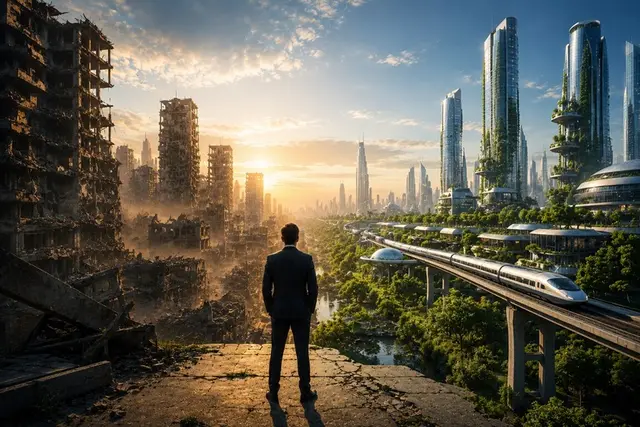
The speed of digital revolution has not slowed down. From the way businesses operate to the way that people interact with everything around technology is constantly transforming almost every aspect of modern life. Some of these transformations are in the making for a long time and are currently reaching critical mass, while some have made an appearance quickly and has caught entire industries unaware. Whatever your job is in tech or just live in a world increasingly defined by it knowing where the technology is taking a turn can give you an edge. Here are ten key digital technologies that matter the most to 2026/27, and beyond.
1. Artificial Intelligence moves from tool To TeammateAI has moved from being an interesting or productive tool to become something that is integrated. In all industries, AI systems operate as active, collaborative rather than passive assistants. In the field of software development, AI codes and reviews codes with engineers. In healthcare, it detects diagnostic anomalies that human eyes might miss. In the fields of content production, marketing, along with legal and other services AI handles first drafts and regular analysis so that human professionals can focus towards higher-order analysis. The move is less about replacement, and more about changing what human work is when repetitive tasks are handled automatically.
2. The Rising Of Agentic AI SystemsA step above standard AI assistants and agents, agentic AI is a term used to describe machines that are capable of planning and carrying out tasks with multiple steps autonomously. Instead of responding to a single instruction These systems break down complicated goals, choose the most appropriate route to take, utilize various tools and data sources, and carry through with no human input. Business-related, this is AI that can manage workflows and conduct research, as well as send messages and update systems with minimal oversight. To everyday users, this is digital assistants that actually achieve their goals rather than just answering questions.
3. Quantum Computing Enters Practical TerritoryQuantum computing has been operating in the realm of theory-based possibilities. It is now changing. While quantum computers for all purposes remain an ongoing project but specialized systems are beginning to show significant benefits when it comes to drug discovery and materials sciences, logistics optimization and financial modeling. Big technology companies and governments are investing more heavily into Quantum infrastructure and race to secure a substantial commercial advantage has been growing. Businesses who are focusing their attention on quantum infrastructure now are in better position when the technology becomes mature.
4. Spatial Computing As well as Mixed Reality Expand Their FootprintAfter the launch of commercially available the high-profile mixed reality headsets spatial computing is finding practical applications far beyond gaming and entertainment. Architecture firms use it for immersive design critiques. Surgery professionals practice complex procedures in virtual environments. Remote teams cooperate in shared 3D spaces. As hardware gets lighter and cheaper, spatial computing will soon become an everyday method of how digital information is processed, navigated, and acted on in both professional as well as everyday situations.
5. Edge Computing Brings Processing Closer To The SourceCloud computing revolutionized the ways in which things were possible due to centralizing processing power. Edge computing is now dispersing it once more, and for an excellent reason. by processing data near the place it's generated, such as in a factory floor, in a hospital ward or inside the vehicle's connected system edge computing can cut down on time to response, improves reliability as well as reduces the need for bandwidth of constant cloud communication. In applications where real-time responsive is not a must, from autonomous vehicles to automated manufacturing to the smart infrastructure of cities edge computing is now a necessity.
6. Cybersecurity evolves into a Continuous DisciplineThe threat landscape is growing too quickly and complex to fit into the outdated model of periodic checks and reactive patching. In 2026/27, serious organizations will treat cybersecurity as a continuous all-encompassing discipline rather than an IT department-specific concern. Zero-trust infrastructure, based on the assumption that all users and systems are trustworthy in default, is becoming standard practice. AI-driven devices monitor networks in real-time and detect anomalies before they are able to become breaches. Humans are the most exploited vulnerability that is why security training and culture equal to any technical solution.
7. Hyperautomation Connects the Dots Between SystemsHyperautomation makes use of AI machines, machine learning and robotic process control to analyze and automate whole workflows rather than isolated tasks. Instead of focusing on simple automation, it examines the linkage between systems that previously required human co-ordination and removes that hassle completely. Businesses ranging from banking and insurance through supply chain management and public services are finding that automation does more than make costs less expensive, but it also transforms the services that an organization is capable to provide at high speed.
8. Green Tech And Sustainable Digital InfrastructureThe environmental cost of digital infrastructures is under greater review. Data centers use huge amounts of electricity. Additionally, the surge in AI training jobs has pushed this usage up. To counter this, the industry spends money on more energy-efficient equipment, renewable-powered facilities, the use of liquid cooling technology, as well as intelligenter strategies to manage workloads. For companies with ESG commitments, the carbon footprint of their tech stacks is now a problem that cannot be hidden in the background.
9. The Democratisation Of Software DevelopmentAI-powered platforms with no-code or low-code let software creation be within easy reach for those without a training in programming. Natural interfaces for languages and visual development environments mean that domain experts can develop functional applications as well as automate complex procedures and integrate data systems, without dependence on external developers. The talent pool skilled at creating digital solutions is rapidly expanding, and the consequences for agility in business and the pace of innovation are enormous.
10. Digital Identity And Data Sovereignty In the CenterAs technology advances the questions of who controls personal data and how identities are copyright are becoming more central than just peripheral concerns. Decentralised identity frameworks, privacy-preserving technologies, as well as stronger rights to portability of data are getting more attention. Governments and platforms alike are moving towards systems that offer users more real control over their digital identities and better insight into how their personal information is utilized. The direction has been determined, even if the course remains in dispute.
The above trends aren't individual developments. They feed off and speed up each other leading to a digital era in rapid change ever before in the past. The need to stay informed is no longer only a benefit for technologists. In a world that is changed by digital power, it's increasingly important to all. For more insight, head to the top andresiden.net/ for more context.
 The 10 Online Social Shifts Influencing The Way We Communicate In 2026/27
Social media is now in the daily routine that distancing its influence from culture at a larger scale is becoming more difficult. It influences how people form opinions, construct identities while they consume entertainment, follow news, interact with others, as well as engage in public discourse. The platforms themselves evolve quickly, driven by regulation, competition, and the relentless desire to attract and hold human attention. What's emerging in 2026/27 is a global social media environment which is more dispersed, more AI-driven, and impactful than ever before at this period. Here are ten major digital trends that influence culture in 2026/27.
1. AI-Generated Content Fills Every PlatformThe amount of AI-generated media on different social platforms have risen to the point of changing the information environment. Videos, images, written posts, and entire accounts generating content that is synthetic at machine speed are now an essential feature of every major platform. Its implications range from somewhat benign AI-powered creators creating content more quickly and causing more harm, to the truly destructive synthetic false information, fabricated peopleas, and fabricated consensus operating at a scale that human moderation can't keep pace with. The ability to differentiate artificially generated content from human-generated material is evolving into a technical challenge and a valuable cultural skill.
2. Short-Form Video Remains Dominant But EvolvesShort-form video is the most popular format for content in the present time, and it will remain so until 2026/27. What is changing is the sophistication of the content as well as those who consume it. Creators are coming up with more nuanced format within the constraint of short-form and consumers are showing increased interest in engaging content that utilizes the format intelligently rather than only optimizing for the first three seconds of their attention. Platforms are themselves experimenting with larger formats and more engagement mechanics as they seek to go beyond scrolling to create the kind of prolonged time-on platform that will translate into commercial value.
3. The Economy of the Creator Matures and StratifiesThe market for creators has grown into a significant sector of economics however the distribution of the rewards has been increasingly uneven. The small percentage of creators at the top of the focus economy make substantial income, while the vast middle of the market struggles in converting audience into sustainable income. Platform algorithmic shifts, increasing popularity of content, and the issue of standing apart in an environment in which AI could replicate content on the surface at no cost are all intensifying the competitive pressure on middle-tier creators. The most resilient businesses for creators in 2026/27 have been those based on a genuine community and unique view, and direct revenue models that decrease dependence on platform algorithms.
4. Alternative Platforms and Decentralised Platforms Gain GroundDisillusionment with the major centralised platforms, fueled by fears about algorithmic manipulation and data privacy, as well as content consistency, and concentration of power on a small amount of tech companies can be a catalyst for growth in alternative social platforms and other decentralised ones. Federated social networks based on protocol openness, niche communities catering to specific groups of interest, and subscription-based models which align platform incentives with user value rather than advertisers' demands have been able to find audiences. The main platforms have huge advantage in scale, but the ecosystem surrounding them is becoming meaningfully more diverse.
5. Social Commerce Develops into a Main Shopping ChannelThe incorporation of retail sales directly into feeds on social media including live streams,, and creator content has led to a shift in shopping habits that is most evident in younger generations. Social commerce, where users can discover shopping and buying goods without leaving a platform, is expanding rapidly across every social media channel. Live shopping formats, pioneered in Asia and gaining popularity globally blend retail and entertainment with a focus on conversion rates and high engagement. For brands, the influencer relationship has developed from awareness marketing into a direct sales channel with measurable revenue attribution.
6. Raw Content And Authenticity Do not accept PolishA reaction to the years of aspirationally-produced, high-quality carefully curated content on social media is growing a desire for rawness, spontaneity, and visible imperfection. People who post unfiltered moments and express genuine uncertainty and live lives that are recognisably human rather than aspirationally impossible are seeing engaged audiences that polished content struggles to connect with. It's not a complete refusal to be a quality-conscious person, but rather an rethinking of what the term "quality" is in the context of a world where authenticity is becoming a source of competitive advantage. The paradox that authenticity as raw can be as carefully constructed as other formats for content can not be ignored by the more self-aware parts of the internet.
7. Mental Health And Platform Design Have to Face More ScrutinyThe connection between the use of social media along with the health of mental wellness, specifically among adolescents is generating significant research, regulatory focus, and public debate. Age verification requirements, screentime tools, algorithmic transparency obligations, and restrictions on certain recommendations for content are being considered or put into place in a range of major jurisdictions. The design decisions of platforms that exploit psychological vulnerabilities to maximize the amount of engagement being questioned is causing modifications to the way products are designed and operated. The distinction between what platforms actually know about the impact of their the advantage design choices and what they reveal publicly is a major point of dispute.
8. Communities and spaces that are based on interests grow In ImportanceAs the broad public square model of social media, in which everyone is posting to everyone about everything, has exposed its weaknesses in terms of danger, polarisation and excessive noise. Smaller and more focused communities are growing in appeal. The Discord servers and subreddits, Substack communities, private group chats, and niche forums based on specific themes or identities are the places where lots of people are finding the online connections and interactions they're no longer expecting from general-purpose platforms. The change is part of a larger understanding that the size that has made platforms so powerful also creates difficult environments where genuine communities can develop.
9. Political And News Content Faces Platform RetreatA variety of social media platforms took deliberate steps to lower the weight of political and news content in their algorithmic recommendations, with the intention of reducing the toxicity and cost it imposes on its role in the user experience. Impacts on the quality of public debate or journalism, as well as political communication are both important and controversial. For news organizations who built distribution strategies around social referral traffic, this retreat represents a serious challenge. For political actors accustomed to using social platforms as direct communications channels, it is leading to a change in digital strategy. The wider question of what role social media platforms are expected to play in democratic information ecosystems remains deeply unresolved.
10. Digital Identity And Online Reputation Develop into Long-Term AssetsThe accumulation of an online presence for decades or more has become something that users can manage with greater prudence. Digital identity, the total of what a person has written, shared or created and acted upon across platforms, has real-world consequences for careers, relationships and potential opportunities that were not understood at the time before social media became a thing of the past. The control of online reputation in terms of what to share with whom, what to curate and how to eliminate content, as well as how to build a steady and trustworthy online presence over time, is transforming into an essential skill for every day life rather than a concern only for public figures or experts in media-facing roles. The persistence and searchability of online content means that decisions made without thinking may be revisited in a different context, with consequences that are difficult to predict.
In 2026/27, social media is increasingly powerful, more contentious and more influential than at any previous point within its relatively short history. The above trends reflect the state of the industry, that is being redefined by platforms, regulators, creators, and consumers simultaneously. Making it work for you, as either a person, a company or a societal entity requires greater rigor as opposed to the early utopian visions of social media that would be necessary. For additional detail, visit the best kansansanomat.fi/ for further context.